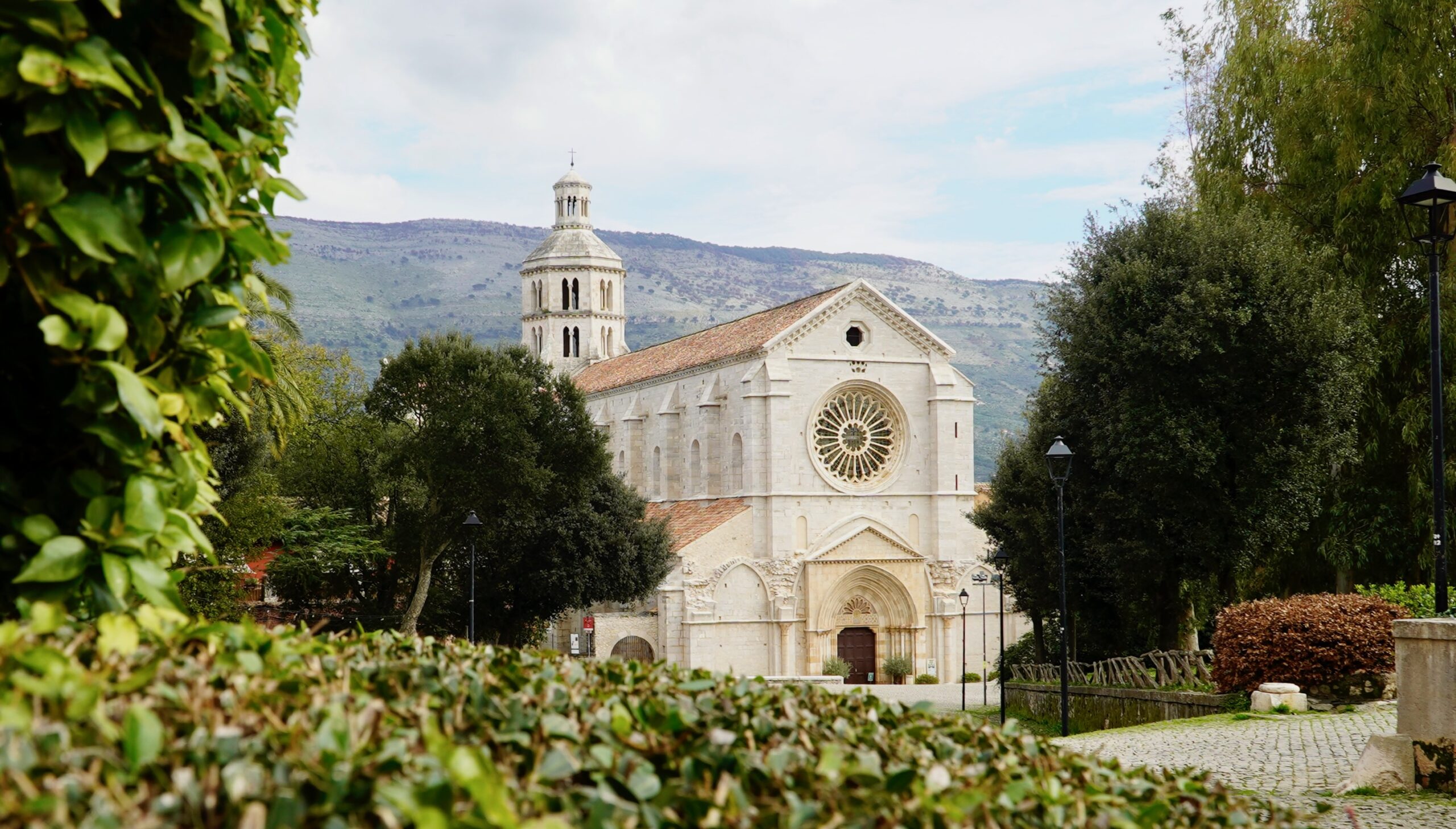
Fossanova Abbey in Priverno
Latina: A Journey into the Gothic Art and History of Fossanova
You will visit the Abbey of Fossanova, a majestic example of Gothic art founded by Benedictine monks in the 12th century on a reclaimed canal. The visit is a unique experience, you will enter another dimension, in a space-time gap: with the refectory, the kitchen, the dormitories, the winter meeting room, the chapter house, the pilgrims’ house, the cemetery and the infirmary, these places preserve signs of the close relationship between Fossanova and the Knights Templar.
The Abbey is linked to the story of the death of St. Thomas Aquinas, in 1274, who, being in those lands, aware of his imminent death, on the back of a mule, went there to spend his last hours in prayer and recollection. In the cloister are visible the footprints that, according to legend, were released by the mule that carried the Saint. The church with its perfect acoustics is ideal for concerts, and you can hear the muted voices of the monks praying and singing. The environments inspired the writer Umberto Eco in the writing of the of the masterpiece “The Name of the Rose”.
Maenza
Latina: Maenza, a Medieval Jewel with enchanting views
You will discover the medieval village that preserves its original structure on a rock with passages, alleys, narrow streets. On a clear day you can enjoy the view of the Pontine Islands: Ponza, Zannone and Palmarola.
The history of Maenza is linked to the great feudal families that have succeeded one another over the centuries: the Caetani, the Borgia, the Aldobrandini, the Borghese, the Pecci.
Among the historical monuments, the imposing Baronial Palace in the upper part of the town. You will also be enchanted by the Loggia dei Mercanti, a covered square where merchants took refuge when, arriving in the village at night, they found the access doors closed. From here you can enjoy a splendid view of the Amaseno valley below, the Pontine Plain and the distant Mount Circeo.
Maenza is famous in Italy for the cherries that have been cultivated since the Middle Ages and which, here, are called “Cerase” and are also preserved in alcohol for the Christmas period. The women of the village still make tasty jams and liqueurs with the variety called “sour cherry”.