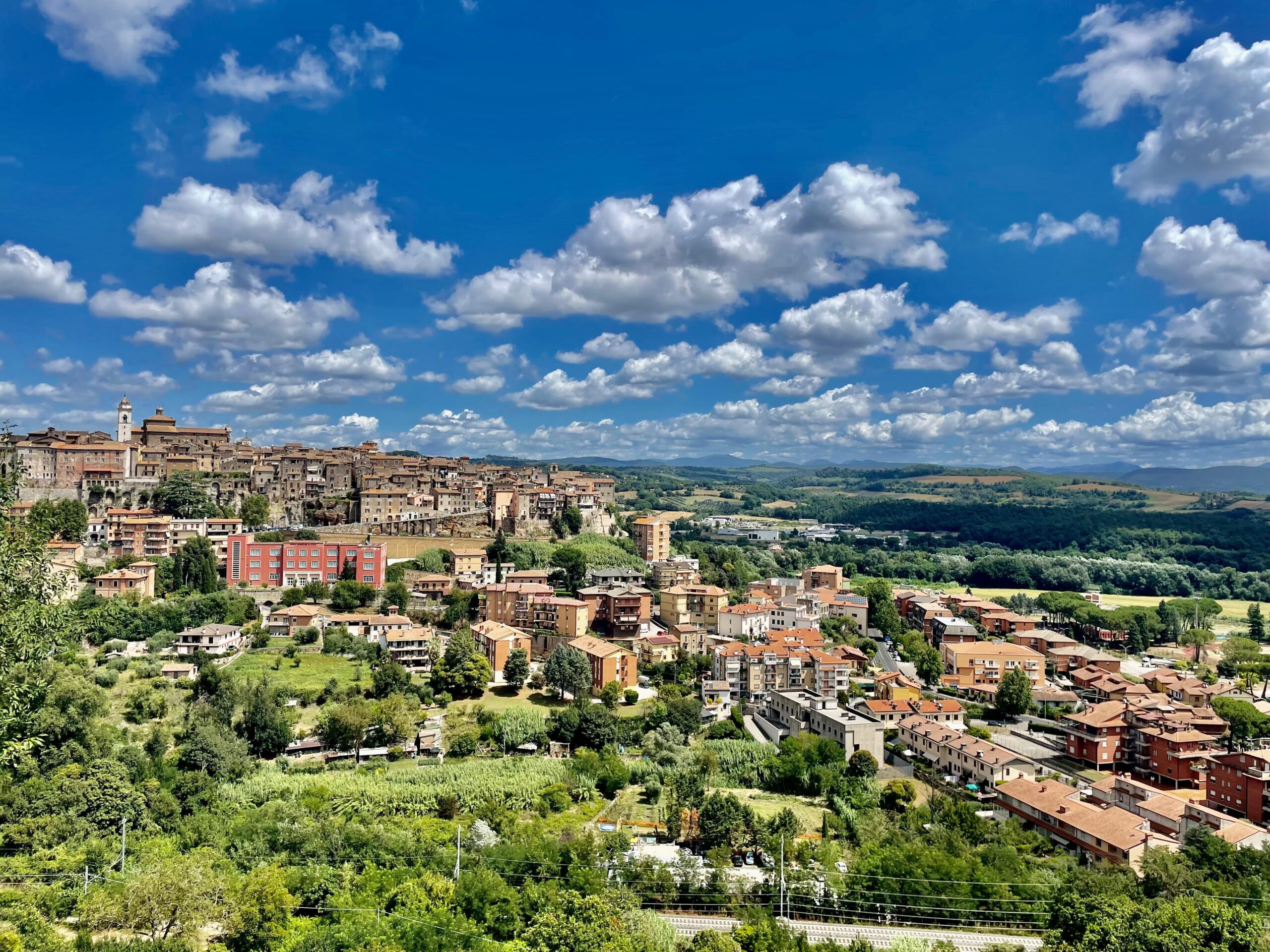
Canino
You will visit the ancient village of Canino, one of the most renowned places in Tuscia, a few steps from the sea and a few kilometers from the border with Tuscany.
You will be able to visit the archaeological areas of the ancient Etruscan city of Vulci with the necropolis and over 10,000 tombs, the Castle and the Baths.
The castle of the Abbadia was originally a Benedictine abbey (hence the name), it was transformed over the centuries by the Farnese family and inhabited by Alessandro Farnese Pope Paul III
During the Napoleonic period, the castle was inhabited by Luciano Bonaparte, the emperor’s brother, as Prince of Canino. The castle can be reached via the charming Devil’s Bridge from which you can enjoy a magnificent view. Inside you will find the Archaeological Museum with finds and testimonies of the Etruscan city.
The town is known for the excellent extra virgin olive oil DOP Canino grown in over 700 hectares. You will be able to walk along the oil road, see the olive groves and oil mills live and Taste “toasted bread” topped with this high-quality product.
Valentano
You will visit the small village of Valentano in the Alto Viterbese area on the border with the Tuscany region. The town dominates the beautiful basin of Lake Bolsena with the fertile plain called the plain, still cultivated today.
Every year, on the day of Ferragosto towards “il piano” the feast is celebrated, dedicated to Santa Maria Assunta, of the “tiratura del furco dritto”, an ancient tradition with roots linked to the peasant world.
The rituals of the feast today retrace the “furrow” of tradition, handed down from generation to generation from father to son. The peasants have to trace a straight furrow of about 5 km long, with a wooden plough pulled by oxen. Today the oxen have been replaced by a plough but the spirit and value of the festival have not changed. The straighter the furrow, the stronger is the hope for a conspicuous harvest and a good omen for the future, thanks also to the blessing of Our Lady. The ritual, performed only by men, represents virility.
A few kilometers from the town, in an isolated and wild area, you will discover Lake Mezzano surrounded by alders, reeds and poplars and populated by trout and carp. Here, the remains of an important village on stilts dating back to the Bronze Age have been found at a shallow depth with ceramics, bronzes and wooden objects that you can find on display in the Museum of Prehistory of Tuscia in Valentano.