Italea
descrizione immagine

Route length 5 days

Experiencing rural Liguria and the ancestral farming life

descrizione immagine

The experience

Se i tuoi antenati sono emigrati da un piccolo paese dell’entroterra ligure, in questo itinerario contadino ti proponiamo degli spunti per uno straordinario viaggio attraverso le valli interne, un’esperienza pensata appositamente per te se desideri riconnetterti con le tue radici familiari legate al mondo contadino e al paesino di origine sperduto tra le montagne liguri.

Immaginati nel cuore di un borgo tranquillo e suggestivo, quel luogo di cui hai sempre sentito parlare in famiglia o che hai cercato di immaginare a fatica.

Un tempo i piccoli paesi lontani dalla costa rappresentavano la vita quotidiana delle generazioni che, con coraggio e speranza, hanno lasciato le meravigliose ma difficili terre liguri per avventurarsi nel Nuovo Mondo.

Quei quieti borghi disseminati sulle alture e ancora oggi difficilmente raggiungibili, subirono un profondo spopolamento a causa di molteplici fattori.

L’entroterra ligure, con la sua economia basata sull’agricoltura di sussistenza, doveva fare i conti con un territorio impervio e costrinse molte famiglie a cercare fortuna altrove.

Questo viaggio non solo rivelerà le sfide di un’epoca passata, ma anche la resilienza e la creatività che hanno caratterizzato intere comunità contadine facendoti comprendere quale mondo i tuoi antenati si sono lasciati alle spalle e con quale bagaglio di conoscenza, tradizioni e superstizioni si sono approcciati ad una nuova vita.

Una delle presenze fondamentali per assicurarsi la sopravvivenza era il castagno, chiamato non a caso “albero del pane”. Per più di sette secoli, il castagno ha costantemente fornito sostegno e supporto agli abitanti dell’entroterra genovese e ligure. 

Cammineremo in un bosco secolare e capiremo come le tradizioni legate alla coltivazione e alla lavorazione della castagna siano state tramandate di generazione in generazione.

Esploreremo l’affascinante mondo della produzione dell’olio extra vergine di oliva e della viticultura eroica, pratiche che hanno radici profonde nella storia agricola della Liguria.

Grazie al lavoro fatto dai tuoi antenati e da generazioni e generazioni prima di loro, gli uliveti caratterizzano ancora oggi il paesaggio ligure crescendo sulle fasce terrazzate.

Con un produttore capiremo come si produceva l’olio di oliva un tempo e cosa si deve fare oggi per mettere  un prodotto di qualità sulla nostra tavola.

Inoltre, durante il viaggio, avrai l’opportunità di deliziare vista, tatto, olfatto e gusto con i cibi autentici della Liguria, quelli che i nonni cercarono di infilare nella valigia di cartone lasciando la loro terra d’origine. 

Sarà un’immersione sensoriale nella cultura gastronomica che ha caratterizzato le tavole liguri per secoli.

Sei pronto a immergerti nella cultura di un mondo rurale in parte dimenticato, dove la terra era vita e fatica? Questo itinerario è un ponte tra il passato e il presente, un modo unico per scoprire le storie e le tradizioni che hanno plasmato le tue radici liguri.

 

In a few words

Gastronomy
Museums
Folk traditions
Nature
Historic village
Peasant world

Tour

Lucinasco

In this small village in Liguria that barely has 300 inhabitants, we have selected a small family-run farm that has distinguished itself over time for its enthusiasm in welcoming and the quality of its oil production.


With Cristina and her family you can enjoy an olive growing experience that embraces all seasons of the year.

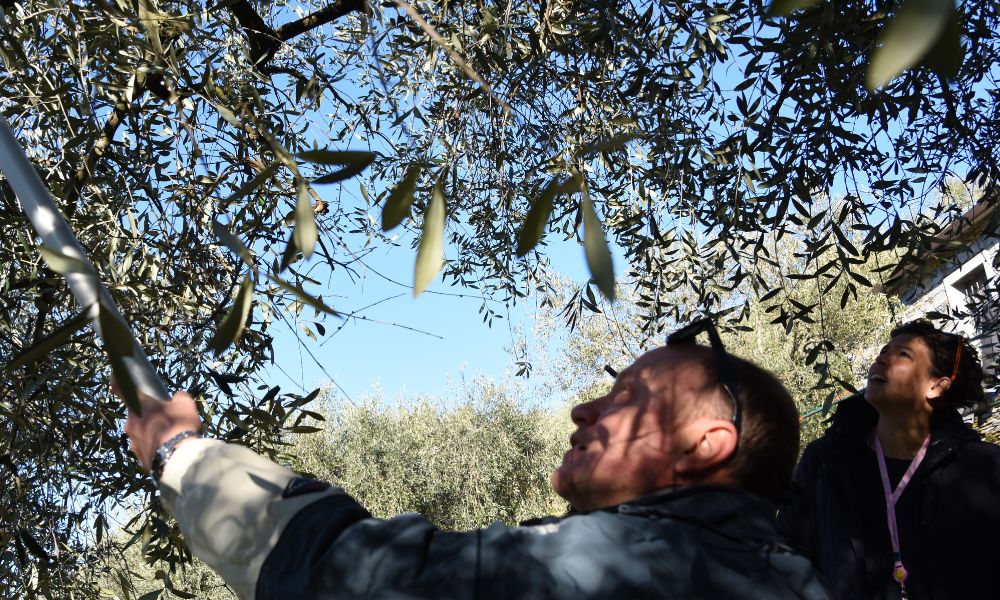
If your visit takes place from November to January, we invite you to spend an exciting morning in the olive grove, immersed in the millenary tradition of olive growing in Western Liguria.

Together with the olive grower, the alarm goes off early in the morning! This is the time of the olive harvest and with him we will understand how it is worked today and how your ancestors worked to obtain the precious golden nectar. The first thing to do is to lay the nets that are used to recover the precious Taggiasca olives.

Below we will make the collection. You will handle the tool that is used to harvest the olives by hand: a sort of electric comb that vibrates and makes the precious fruits fall from the tree without damaging them.


Once recovered, the olives must be placed with care and attention in the baskets to set off in a hurry towards the mill. After cleaning them of the leaves, we will head to the small mill owned by the company, where we will have the unique opportunity to watch the milling.

What a thrill to entrust the fruits to the kneading and see the precious olive juice come out at the end. In the past, the tools available were very different and the quality of the oil was not the same. But as a good descendant of Ligurian peasants, you cannot fail to know the most important product of the Italian table. So you’ll have to trust your sense organs: your nose to smell the scents of freshly cut grass, almond and artichoke; the taste buds to perceive the fruity scents of extra virgin olive oil. Just like a real professional taster!


As a reward for the excellent work done, a real peasant snack awaits us, made of artisanal garden products, ancient flavors and popular songs. And that’s not all, at the end of the milling, you will receive your bottle of precious Cultivar Taggiasca extra virgin olive oil, fresh from the mill. All you have to do is label the bottle with your name. What an “orgOlio” to bring home the product of the land of the ancestors!


If your visit takes place in the summer, the adventure in the world of olive growing will retain the same authenticity with a different schedule. Since there are no olives to pick, Cristina will welcome us with a good cup of coffee.


Afterwards, we’ll immerse ourselves in the olive grove to admire its majesty, understand how the plants were cared for and cared for during the 12 months of the year, and discover the art of dry stone walls, declared an intangible heritage of UNESCO. We will have the opportunity to appreciate the wisdom of the ancestors in arranging the stones one on top of the other without using glues of any kind and to learn the secrets of this ancient practice at the base of agriculture on the terraces of Liguria.

Chiusanico

Our day dedicated to the culture of extra virgin olive oil cannot leave the Imperia area without a visit to the Museum of the Oil Tin in Chiusanico.


It is a unique collection in the world, put together by the entrepreneur Riccardo Guatelli and placed in a seventeenth-century oil mill. The precious collection, consisting of about 6,000 pieces, represents a historical and artistic heritage, with oil containers that played a crucial role in the Italian export industry between the nineteenth and twentieth centuries.


These cans, decorated with Italian symbols, were mainly intended for Italian emigrants in the new world who wished to take a piece of home with them. Olive oil was not found in America but it was an indispensable product on the table of emigrants. That’s why they ordered it and had it shipped from Italy. But having it arrive by ship was not enough, they wanted to receive it in containers that celebrated the pride of being Italian.

This led to the development of lithographed tinned cans with original decorations.


Many of these containers now make up the collection of the Guatelli Museum, which tells the story of Italianness through evocative and creative images of symbolic characters and places of our country.

In a maze of colors, the thematic series with cans dedicated to historical figures and symbolic places of Italy will enchant you


The collection has been carefully catalogued and has attracted visitors from all over the world.

Among them is the director Francis Ford Coppola, who is passionate about his story of Italian emigration. The Italian-American director personally visited the Museum and chose to add some pieces to his collection in California, imagining the pride of his grandparents when they saw the precious product of their land delivered to their home.

Vessalico

The peasant world was made up of silent work and close contact with nature and the environment.

Constantly exposed to natural elements that they could not control but that determined the success or failure of the harvest and production, they developed a culture made up of deep-rooted traditions. Passing from generation to generation, beliefs, myths, convictions and customs were reinforced and became the heritage of the community. The journey to better understand this world of rituals, faith and superstition begins with Vessalico’s garlic.


It is a variety grown in the upper Arroscia valley, it stands out for its intense aroma and delicate taste, made unique by the mild climate and favorable soil. In addition to having multiple phytotherapeutic activities, vessalico garlic is one of the 7 basic ingredients that make up pesto alla genovese, a sauce renowned all over the world.

We will meet a producer who will show us the characteristics of this product and we will discover customs, proverbs and superstitions of Ligurian farmers.

We will then continue towards Molini di Triora. The village takes its name from the past presence of numerous mills dedicated to grinding cereals and chestnuts, the main sources of livelihood for the upper Argentina Valley. It is said that in the past there were as many as 23 mills, it is not difficult to imagine when they were moved by the force of water or that of the mule.

In the central core of the village we will visit Casa Balestra, a historic residence now transformed into a museum that preserves testimonies of past life, preserving precious memories.

The dominant theme in this picturesque village and a precious asset for carrying out peasant activity is the water that flows here in the Argentina, Capriolo and Rio Corte streams and that collects in the picturesque Noci lake. We will understand how water was recovered, used and stored when modern aqueducts did not yet exist.

Triora

Our day ends with an aura of mystery in the so-called witches’ village: Triora.

In ancient times, Triora was the stage of one of the most famous witch trials in Italy, during which some women were accused of witchcraft between 1587 and 1589, attributing to them the responsibility of a persistent famine.

Today, the atmosphere of a medieval village pervades Triora, with narrow alleys, squares and gates depicting witches, protected by an ancient castle.


The local women were the custodians of the knowledge of the wild herbs of which these valleys are rich and we will meet one who will enthusiastically teach us how to recognize them and will pass on the secrets to use them in the kitchen and as natural medicines. Just like your ancestors did when there were no pharmacies and you knew the secrets of nature.

Triora was also renowned for its round bread.

The local bakery was a meeting point for housewives, who baked loaves marked with letters or stamps. The recipe for this bread remains a mystery, despite numerous attempts to reproduce it by the surrounding localities.

Genoa

You can’t come to Liguria without putting your nose in a bouquet of basil to capture its intense nuances of scent.

Today’s program is tinged with greenery and Genoese pride. Let’s get to know his majesty pesto, king of the Ligurian table and probably the sauce that your Ligurian ancestors missed the most.


After familiarizing ourselves with oil and garlic, we focus on the main ingredient: basil.


Essential for the authentic recipe of Genoese pesto, the PDO one comes from Pra’, a town in western Genoa that has no equal in any other place in the world.


The plant has an intense and characteristic aroma that does not have to resemble that of mint. The leaves are oval and convex, pale green and small to medium in size.


A historical curiosity reveals that during the Crusades, ships were filled with basil to ward off insects and unpleasant odors. This explains how the plant, which is fundamental for pesto, has come down to us.


Entering a basil greenhouse is a mystical and unforgettable experience. Here we will see how the delicate seedlings are grown and harvested and to guide us will be one of the most famous producers in the area.


After answering all our questions, it’s time to try your hand at elbow grease, mortar and pestle to transform the tender leaves into the aromatic sauce and enjoy it on a fragrant piece of focaccia!


Once you have made the recipe together, you will no longer be able to do without it. And once back home, sharing it with friends and relatives will be an opportunity to turn an evening into an authentic Italian, or rather Ligurian, party!

Val Cichero and Valle Sturla

For more than seven centuries, the chestnut tree has sustained the lives of the inhabitants of the Genoese and Ligurian hinterland, becoming the fulcrum of the Apennine rural economy until the Second World War. The cultivation of chestnuts was so vital that the survival of the people of the mountains depended largely on their harvest. A deep culture has developed around this tree, transmitted through the generations, so important that the chestnut tree has been given the honorary title of “bread tree”.


The Ligurian territory does not offer adequate flat spaces for the cultivation of cereals. The little wheat obtained from small fields or terraces was mainly used to strengthen chestnut flour, used in the home production of pasta and sometimes in bread-making. Chestnut groves were mainly cultivated to harvest and market chestnuts or to dry them and make flour.


The tree has been a faithful and reliable companion in the life of the Ligurian hinterland, with a production cycle that went beyond the simple interest in the fruit. The annual removal of suckers allowed them to be used for the production of baskets, pruning waste served as firewood, dry leaves became bedding for animals, and ungrafted plants provided excellent wood for the construction of utensils, furniture and furnishings. In addition, in the well-kept chestnut groves, fine mushrooms, especially porcini mushrooms, could be collected. Practices that your ancestors knew well.


In the kitchen, the chestnut has contributed significantly to creating an authentic gastronomic heritage made up of pasta, bread, cakes, pastries and other specialties.


A walk in a chestnut grove in Val Cichero, a farmhouse for collecting and storing leaves, an ancient drying ground for chestnuts and a mill still in operation are the fundamental stops on the chestnut road.


The reward will also be great at the table, where simple dishes all based on chestnuts await us in the warm and welcoming environment of the mill; No nouvelle cuisine, just healthy, simple food and lots of joy to enjoy together.

descrizione immagine

Mananarola - Riomaggiore - Vernazza

A visit to rural Liguria is not complete without realizing what it means to do “heroic viticulture”.

We will go to Cinque Terre, but we will not visit them as tourists normally do. Above all, ours will be a moment of encounter with the inhabitants and local producers and those who live and preserve this land perched on the sea amidst a thousand difficulties.


Imagine vineyards cultivated in extreme conditions, on steep slopes of vertical mountains on the sea.


This practice produces unique wines that tell the story of their wild soil. Despite representing only 7% of European vineyards, the vineyards of Liguria are a treasure with a unique identity and historical value.

This place has been famous since Roman times for viticulture, and those incredible terraces were built over a thousand years to make room for vines.


Viticulture has played a key role in the growth of Cinque Terre throughout history. Although in the twentieth century it was put to the test by natural events and globalization, the determination and passion of small local entrepreneurs have revived it, with total respect for nature and traditions.


He is one of the local producers we will meet and he will be the one to accompany us to the vineyard and cellar through steep paths and stone stairways.


A physically demanding day but full of amazement.

The wonder will be in our eyes when we find ourselves on the narrow terraces overlooking the Ligurian Sea and the wonder will be in the glass when we sip the savory and straw-yellow wine that has been produced here for centuries.


Only a traveler deeply in love with his homeland and eager to explore it in all its facets can fully and consciously enjoy an experience full of ancestral meanings like this.

start now

Let us guide you on your journey to the Roots

Don't miss the opportunity to explore the places that have shaped your origins, request a tailor-made itinerary without obligation