Italea
descrizione immagine

Route length 4 days

Maritime Liguria: artisanal activities and ancient traditions

descrizione immagine

The experience

Benvenuto nell’incantevole mondo marinaro della Liguria, una regione baciata dal sole e affacciata sul mare, dove le antiche tradizioni si intrecciano armoniosamente con la vita moderna.

Se i tuoi antenati hanno origini in un paese della costa ligure, in questo itinerario puoi trovare suggestioni e suggerimenti  per immergerti nella cultura marittima che ha plasmato la storia dei tuoi avi e di queste terre.

L’itinerario ha l’obiettivo di fornirti degli spunti di visita e può essere rimodulato a seconda dei tuoi interessi personali.

La Liguria, con le sue coste a picco, vanta una tradizione marittima radicata nei secoli, a tratti ancora viva, a tratti bisognosa di recupero. Pescatori e navigatori liguri raccontano storie di coraggio e di dedizione.

Le strette stradine dei borghi marinari, testimoni di un passato ricco di avventure e scambi commerciali, rivelano usanze tramandate di generazione in generazione.

Ti proponiamo un’esperienza a stretto contatto con il mare. Imbarcandoti su un autentico gozzo ligure scoprirai i segreti della pesca tradizionale; farai un salto nel tempo apprendendo le tecniche di navigazione che probabilmente anche i tuoi antenati conoscevano.

Il cuore pulsante di questa avventura è il contatto autentico con le persone del posto.

Ti accoglieranno con facce ruvide e sorrisi calorosi, condividendo racconti di vita e svelando segreti che solo chi vive a stretto contatto con il mare può conoscere.

Sarà un’occasione unica per apprendere le usanze locali, partecipare a rituali antichi, preparare e gustare autentici piatti di pesce preparati con passione e maestria.

Ogni passo, incontro, attività, ti condurrà a nuove scoperte, offrendo panorami insoliti e occasioni per vivere appieno l’atmosfera al sapore di sale che caratterizza questa terra, luogo d’origine dei tuoi antenati.

In a few words

Cooking class
Museums
Nature
Historic village
Sea
Seafaring culture
Traditions
Experiences
Gastronomy

Tour

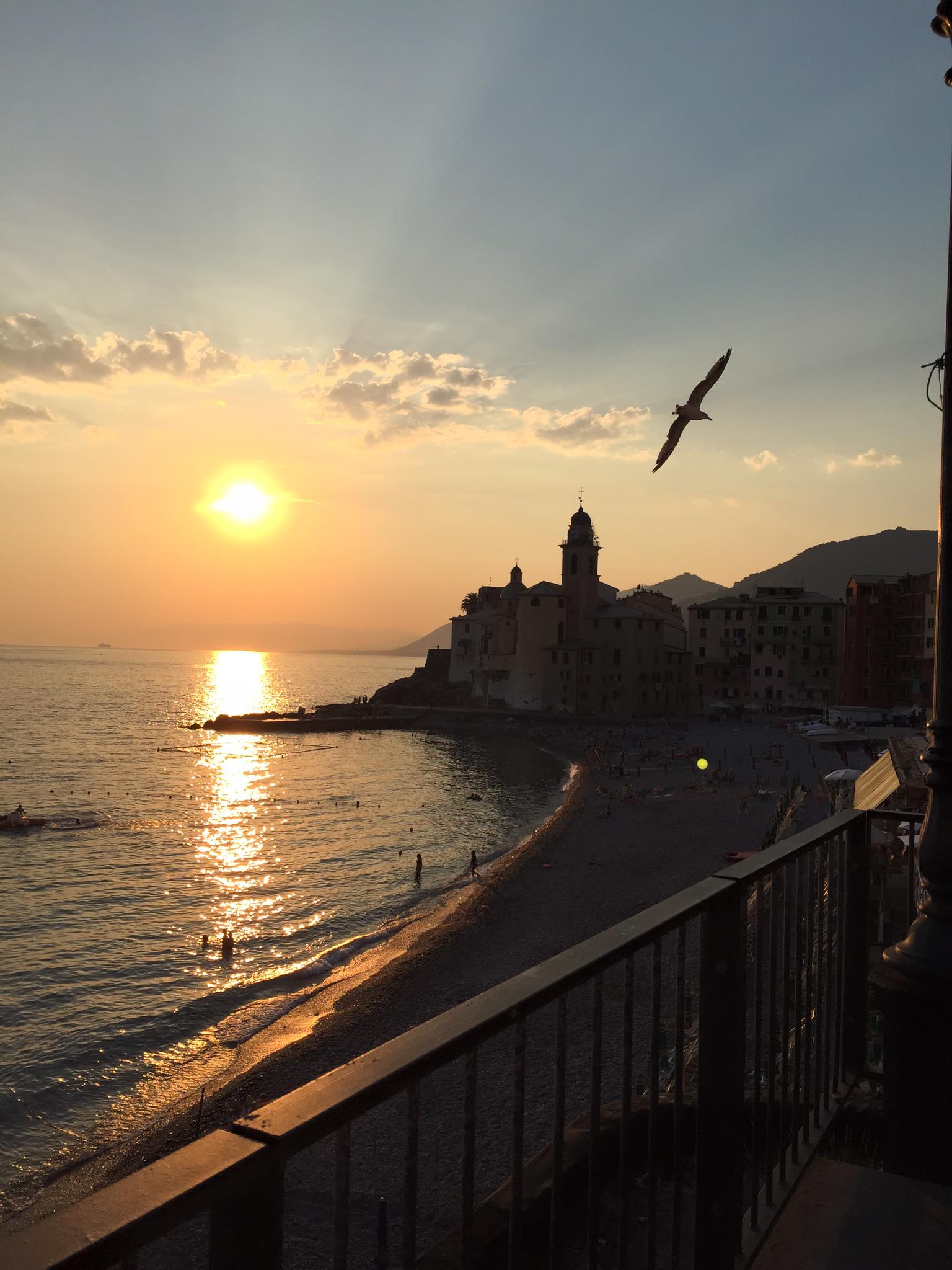
Camogli

It is a place where the spirit of Liguria gets under your skin, making you fully immerse yourself in the authenticity of seafaring customs and traditions.

Fishing and the art of navigation are written in Camogli’s DNA.

Since the Middle Ages, the population has been sailing the Mediterranean Sea to fish for tuna, blue fish and coral.

In the nineteenth century he made the big leap by dedicating himself to professional navigation.

The owners and captains of Camogli took part in the great campaigns of conquest of the time in the pay of the European rulers.

They amassed wealth and transformed the small village into the colorful village of today. Accompanied by an expert guide, you will find many pieces of Camogli’s maritime history among its streets, its archivolts, its civil and religious buildings.

We will also visit the Maritime Museum, which still houses documents and testimonies of the so-called “city of a thousand white sailing ships”.

It was the nineteenth century, the time when the first brave pioneers embarked on brigantines that shuttled between the Americas and the Americas to look for new business and life opportunities.

The tonnarella of Camogli and San Fruttuoso

After a light sailor’s snack, our first outing at sea awaits us. Let’s go to the “Tonnarella”, now a Slow Food presidium.

It is a seasonal fishing system and differs from the tuna trap by its smaller size and a short barrier net. It was lowered into the sea from April to September.

Its history is centuries-old, mentioned in documents from the 1600s but presumably older. Originally for tuna, it adapted in the 1800s to fish smaller but valuable species, due to the decrease in tuna caught.

On board a private boat we will try to reconstruct this fishing system through images and models.

We will then continue our tour towards Porto Pidocchio where it will be possible to admire the Golfo Paradiso from inside the Marine Protected Area of Portofino.

Finally, we will reach S. Fruttuoso, where we will visit the ancient place where nets with coconut fibers are still prepared today.

And if we are in the summer, it is possible to cool off with a dip in the crystal clear and inviting waters of the Ligurian Sea which, in the bay of S. Fruttuoso, houses the famous submerged statue of the Christ of the Abyss.

Lavagna

Outside the port of Genoa, historically the shipyards were set up on the beach and then dismantled after finishing the construction of the boats.

Along the Ligurian Riviera, the most famous places for the construction of boats were Varazze, Lerici and Lavagna.

It is in the latter town that the doors of a shipyard that is still active will open to us.

Here we will have the opportunity to touch the skill of a shipwright who still works the wood with the tools of the past to transform it into gozzo boats according to the ancient Ligurian tradition.

After the visit to the construction site, we will take a walk in the historic center of the town renowned for the extraction of slate, the black stone of Liguria.

From the quarries that were located on the hills, the porters carried the stone slabs on their heads, walking barefoot along the paths that reached the sea.

Here the slabs were loaded onto the leudi, the lateen sailing boats used to transport goods along the coast.

We will end the visit with a trip to the panoramic monumental cemetery of Lavagna where shipowners, captains and emigrants have decided to rest, with an eternal gaze turned to their sea.

Avegno

We continue our journey dedicated to the seafaring world by moving a few kilometers from the coast, in the village of Avegno.

Here we will reach the laboratory used by a local association that deals with the enhancement of maritime culture.

The object of his activities is not limited to artifacts, such as old hulls or equipment, but extends to the “know-how”, to the construction art of shipwrights, sailmakers and ropemakers.

It’s time to learn by doing and experimenting for yourself. We will learn how to make ropes and marine knots, how caulkers make boat joints watertight and how to make leads.

And then we will put our hands in the catch by cleaning, salting and preserving the anchovies just like the Ligurian sailors did and do.

The anchovy is a very popular fish in this land but it has a short life and preserving it is essential, we will understand it when we have in our hands in the so called “arbanella” that we have made ourselves.

And to celebrate the work we have done together, we will toast with a glass of Vermentino, to rediscover the flavor of the sea even in the glass!

Genoa

What does it mean to be a fisherman today? We will find out together with those who still do the job amidst a thousand difficulties.

We go to Boccadasse where the guys of the Fishermen’s Cooperative are waiting for us and we embark with them for a fishing trip at sea.

It won’t be difficult to understand the verses of the song by singer-songwriter Pierangelo Bertoli: “Fishing, come on, pull fisherman / fishing and don’t stop / little fish in the net / long days in the middle of the sea”.

There is never a lot of fish and often it is what we are no longer used to eating, but you have to live with it.

It may happen that the goiter with which the fishermen go out is older than them. They have a few kilometers of nets to use depending on the season and the type of fish.

Being a fisherman was and still is a hard job, made up of expectations and points of reference. There is no GPS on board, longitude and latitude are calculated with intersections; between a bell tower and a tree, a house and the mountain and so on.

Just like those ancestors for whom she had become so hard that she decided to leave elsewhere.

Once you return to land enriched by this experience, it will not be over yet.


Boccadasse

We will take a walk in the picturesque village of Boccadasse, which inspired Ligurian emigrants to build the Boca neighborhood in Buenos Aires.

The day dedicated to fishing will end in a typical restaurant, where we will be able to taste the fresh fish cooked in a simple way, as the Genoese tradition dictates.

It’s useless to ask what’s on the plate, only the sea knows that!

Genoa

Although Liguria is a land overlooking the sea, fish dishes are not many and rather recent. The cuisine is mostly based on ingredients that come from the earth.

There is a dish, however, that expresses the whole palette of the villages of Liguria and perfectly harmonizes sea and land. It’s called “Cappon Magro”

It is a dish dating back to times when noble leftovers were reworked into dishes rich in fish, vegetables and green sauce, with an all-Genoese character.

The origin of the dish’s name is shrouded in mystery.

Initially born as a modest preparation, Cappon Magro has now become a rich dish, with abundant ingredients and a sumptuous decoration.

Traditionally associated with the Lenten period, today it has turned into a sumptuous Christmas appetizer but it is also eaten gladly in summer, as it should be served cold.

Some suggest that it may have seafaring roots because it is prepared with the fish caught, crackers used during long sea crossings and vegetables probably coming from the home gardens cultivated by the captains when they were not sailing.

In some versions of regional cookbooks, it is suggested that the term “Cappon magro” may be a reflection on the delicacy of the dish, as opposed to the majesty of a rich capon dish.

Whatever the origin of the name, what we will do together to conclude our journey into Ligurian seafaring culture is a recipe that you can easily replicate once you get home.

Not a cooking class but a creative workshop to give shape to your personal “cappon magro” where history and flavors intertwine in a unique and colorful combination.

start now

Let us guide you on your journey to the Roots

Don't miss the opportunity to explore the places that have shaped your origins, request a tailor-made itinerary without obligation