Italea
descrizione immagine

Route length 2 days

Genoa and the emigrants' journey to "Merica"

descrizione immagine

The experience

Genova, città affacciata sul Mar Ligure, incanta i viaggiatori delle radici con la sua storia millenaria, il suo  porto e le testimonianze tangibili del viaggio che ha segnato profondamente il destino di migliaia di persone tra il XIX e il XX secolo.

Questo itinerario di due giorni è incentrato su Genova in quanto punto di partenza verso il nuovo mondo.

Attraverseremo i vicoli acciottolati e i monumenti storici di Genova, scavando nel legame tra il passato marittimo e le storie struggenti degli emigranti che hanno varcato i confini di questa città alla ricerca di una nuova vita.

Dopo aver respirato l’aria salmastra del porto, ci inoltreremo nei vicoli stretti e tortuosi della città vecchia.

Il labirinto urbano ci catapulterà indietro nel tempo, trasportandoci nell’epoca in cui la città era il crocevia di persone provenienti da tutta Italia per imbarcarsi su un brigantino a vela o un piroscafo a motore verso le Americhe.

I colorati edifici medievali, i vicoli stretti e bui, le piazze animate e le attività portuali ci trasporteranno in un’atmosfera unica, dove il passato si fonde con il presente in un’atmosfera da suk mediterraneo.

Le parti della città sulle quali ci concentreremo maggiormente sono il porto, il Museo dell’Emigrazione Italiana e la Lanterna.

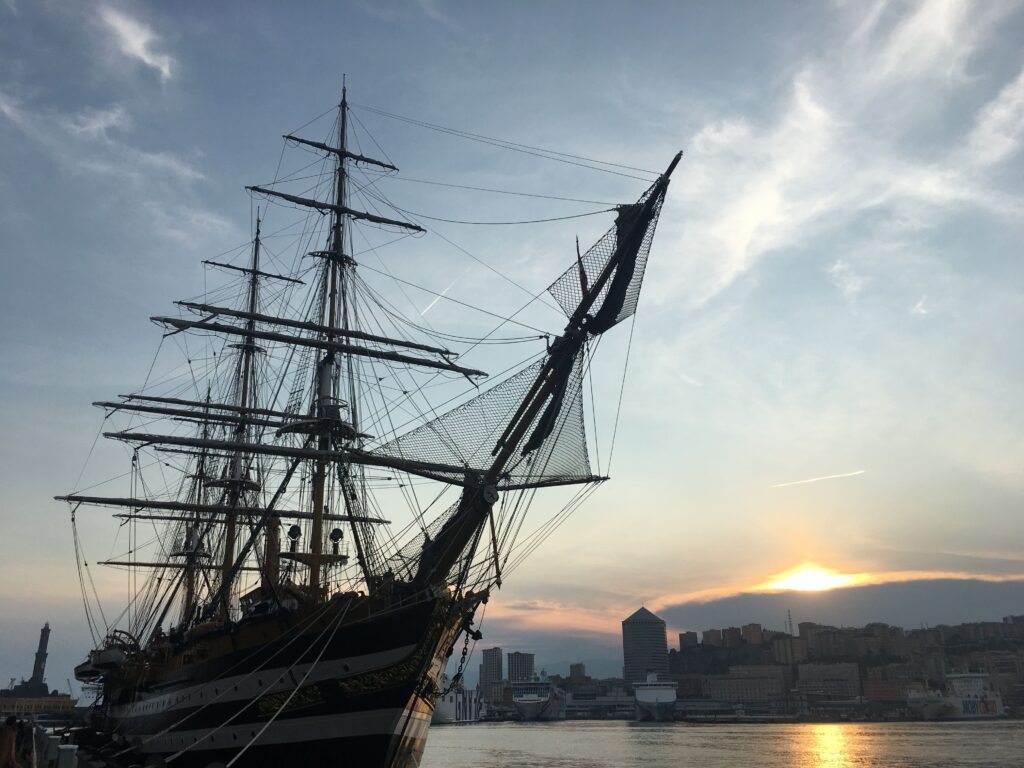
Il viaggio inizia nel cuore pulsante di Genova: il suo porto. Conosciuto come il “porto più antico d’Italia”, questo scenografico approdo marittimo ha visto navi solcare le sue acque fin dal Medioevo.

Osservando le navi che entrano ed escono, ci si immerge immediatamente nella storia di un luogo che è stato il punto di partenza per innumerevoli avventure.

Le antiche banchine, le gru secolari e i magazzini restaurati raccontano storie di commercio, di scoperte e di partenze che hanno plasmato la destinazione di tante famiglie.

Il Museo dell’Emigrazione Italiana sorge come custode delle testimonianze di chi ha abbandonato la propria terra in cerca di opportunità oltre i confini nazionali. 

Le fotografie sbiadite, le lettere dalla calligrafia malferma e gli oggetti d’epoca ci introdurranno nelle vite di coloro che sono partiti con una valigia di cartone e una speranza forte nel cuore.

Un’emozionante esplorazione che ci permetterà di comprendere appieno il coraggio, la determinazione  e le difficoltà incontrate da chi ha intrapreso questa straordinaria avventura.

La Lanterna di Genova, simbolo maestoso della città, è uno dei fari più antichi e celebri al mondo, oltre ad essere uno degli emblemi storici del porto di Genova.

Ergendosi con imponenza sulla collina di San Benigno, la Lanterna domina l’orizzonte e offre una vista panoramica straordinaria sulla città e sul Mar Ligure.

Era l’ultima cosa che gli emigranti in partenza dal capoluogo ligure vedevano allontanandosi dalla costa e non è difficile immaginare il loro cuore già gonfio di nostalgia per la terra natia.

Un’altra parte del viaggio che esploreremo insieme è quella legata alle condizioni di navigazione.

All’interno del Museo del mare e della Navigazione c’è un’intera sezione dedicata alla traversata per mare sui transatlantici e i piroscafi dell’epoca. Mettiti letteralmente nei panni dei tuoi avi, imbarcati con il passaporto di uno di loro, sali a bordo e tocca con mano le condizioni di viaggio in terza classe.

E quando sarai arrivato a Ellis Island, cerca di passare i controlli di sanità e sicurezza. Solo alla fine scoprirai se hai ottenuto il tanto agognato visto di ingresso o se, al contrario, sarai rimandato indietro con un “denied” stampigliato a caratteri cubitali sul tuo documento d’identità.

porto di genova

In a few words

Guided
Museums
Historic centre

Tour

Visit of the city and significant places for emigration

The proposed itinerary goes beyond the traditional guided tour and explores the places in Genoa that marked the departure of Italian emigrants at the end of the nineteenth century.

Through the words of your guide, you will make an imaginative journey in the footsteps of your ancestors, experiencing the expectation and hope of all those who have made this leap into the unknown.

During the great emigration period,  Genoa was one of the ports of embarkation for transoceanic navigation, especially to South America and the United States.

The visit explores the motivations of thousands of emigrants, the places frequented before departure and the conditions of the journey.

The “Old Port” was the exit point from Italy as early as the nineteenth century, as the city adapted to the increase in migrants.

The Maritime Station, built in the 1930s, managed the arrivals and departures of new ocean liners.

The visit continues among smells and activities around the port, in the alleys that welcomed emigration.

You will taste the typical Genoese dishes in the ancient “sciamadde” also frequented by emigrants.

Piazza de Ferrari, once the headquarters of the Società di Navigazione Italia, is part of the itinerary, with insights into the history of the shipowner Raffaele Rubattino.

The itinerary offers an emotional journey through the lives of Ligurian and non-Ligurian migrants, enriching the understanding of your family roots.

Mei - The Museum of Italian Emigration

The Museum of Italian Emigration in Genoa is a tribute to the history of Italians who sought better life opportunities abroad.

Spread over 3 floors, the national museum preserves memories and narratives across 16 thematic areas, following the path of millions of emigrants from the late nineteenth century to the mid-twentieth century.

The rooms offer a complete immersion in the experiences of many people, using historical documents, photographs, letters and audiovisual testimonies, combining a chronological and thematic perspective.

Particularly moving is the section dedicated to personal stories, where the direct voices of the emigrants tell stories of sacrifice and resilience.

In the museum we will help you to put your personal story in the historical context of Italian emigration.

The reasons for the journey that pushed your ancestors away from Italy will be even clearer to you and, if you wish, we can reflect together on universal themes such as identity and belonging.

The MEI museum is an educational and emotionally engaging place capable of creating a dialogue between past and present.

Genoa's Lighthouse

The lighthouse of Genoa that the Genoese call “lanterna”, lantern, is an emblematic icon of the city.

It was once an isolated building and inaccessible to the public.

Today, it is possible to reach it through a pedestrian promenade that starts from the parking lot of the Ferry Terminal.

This route offers an exceptional view of the most active part of the Port of Genoa.

At 76 metres high, the Lanterna is the tallest lighthouse in the Mediterranean and the second tallest in Europe.

The Genoese lighthouse  was the last thing Italians saw as they said goodbye to the old world in search of fortune. And most likely, it was the same for your ancestors.

Inside the fortifications built for its defense, today there is a unique museum, which does not exhibit objects, but tells the story of Genoa and its province through stories and testimonies, embracing aspects ranging from history to art, material culture to characters, local traditions.

To reach the top of the lighthouse, you have to climb 172 steps but once at the top, the view of the port city is incomparable.

Righi and the village of Boccadasse

Our imaginary journey dedicated to departures takes us, as a last stop, to the places of farewell.

It sounds like a play on words, but it is in the places of the city that aroused the most nostalgia that we want to take you.

And we do it on the notes of a song: “Ma se ghe pensu” written in Genoese dialect in 1925.

It tells the story of a Genoese who left poor for the Americas and manages to improve his economic situation.

After thirty years, overwhelmed by nostalgia, he decides to return to Genoa, despite his son’s opposition.

Before finally going back, he sings about the beauty of Genoa and some of its iconic places.

One of these is the Righi, a panoramic point located on the heights and from which you can enjoy a poignant view of the city.

We will reach it by funicular, one of the alternative means that the Genoese use to move from the bottom to the top and vice versa.

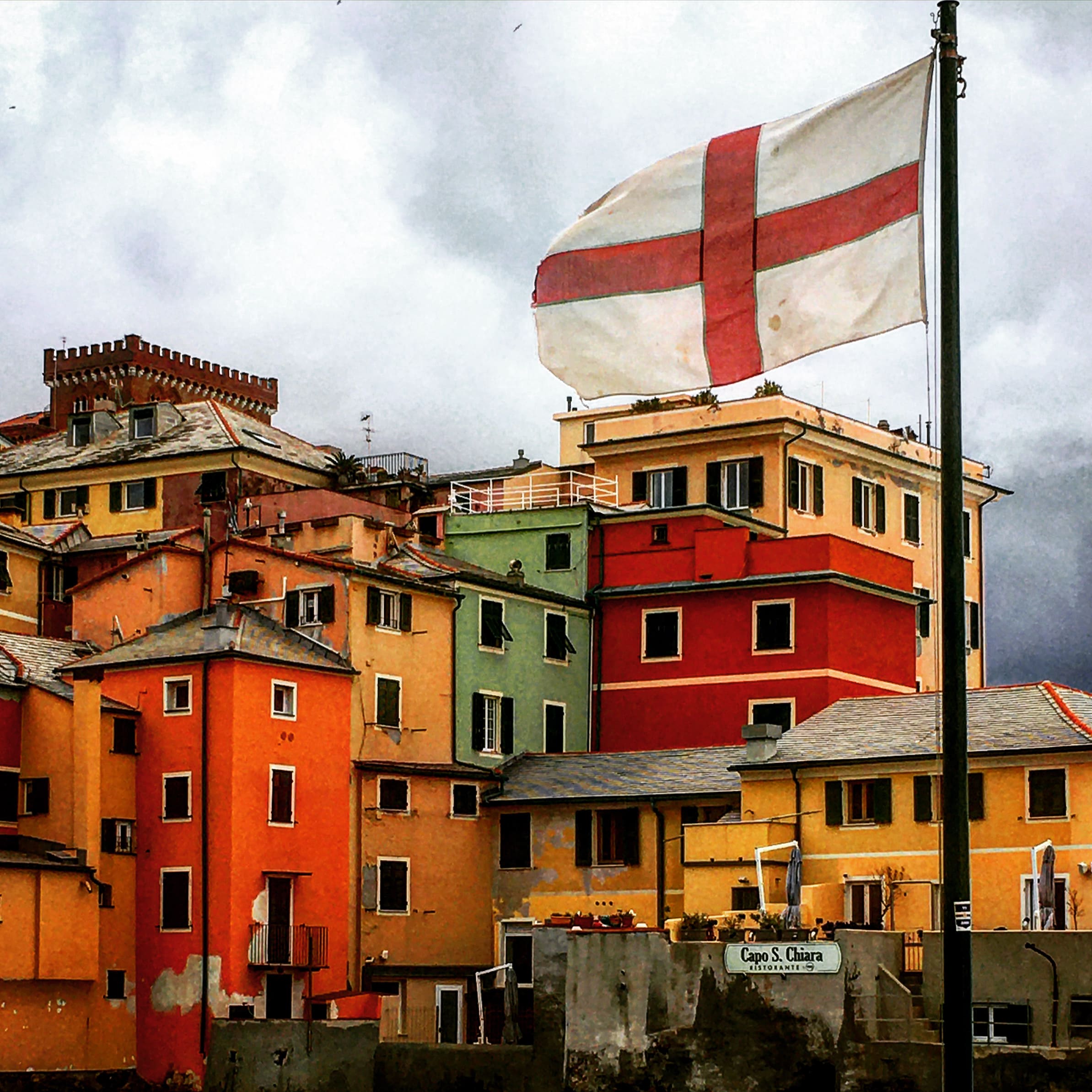
Our day together will end with an aperitif at sunset on the beach of Boccadasse where fishermen once lived and which, with its multicolored facades, inspired the Boca neighborhood in Buenos Ayres.

start now

Let us guide you on your journey to the Roots

Don't miss the opportunity to explore the places that have shaped your origins, request a tailor-made itinerary without obligation